Why journaling doesn't work for everyone
A blank page asks you to decide what to write, find the words, and keep going for a while. That's a lot to ask at the end of a long day. If you've tried and quit, the format may simply not suit you.
Reflection can be small
Reflecting just means noticing. How was today, compared with yesterday? What was on my mind? You can answer those with a number and a word. A tiny record you keep up beats a beautiful one you abandon.
Three low-effort ways to reflect
Pick whichever of these takes the least effort, and add the others when you feel like it.
- Rate it. One tap for your mood each day, plus anxiety, energy and sleep if you like.
- Name it. Pick up to three feeling words from a grid instead of finding your own.
- Tag it. A word or two such as "work", "family" or "exercise" marks what the day was about.
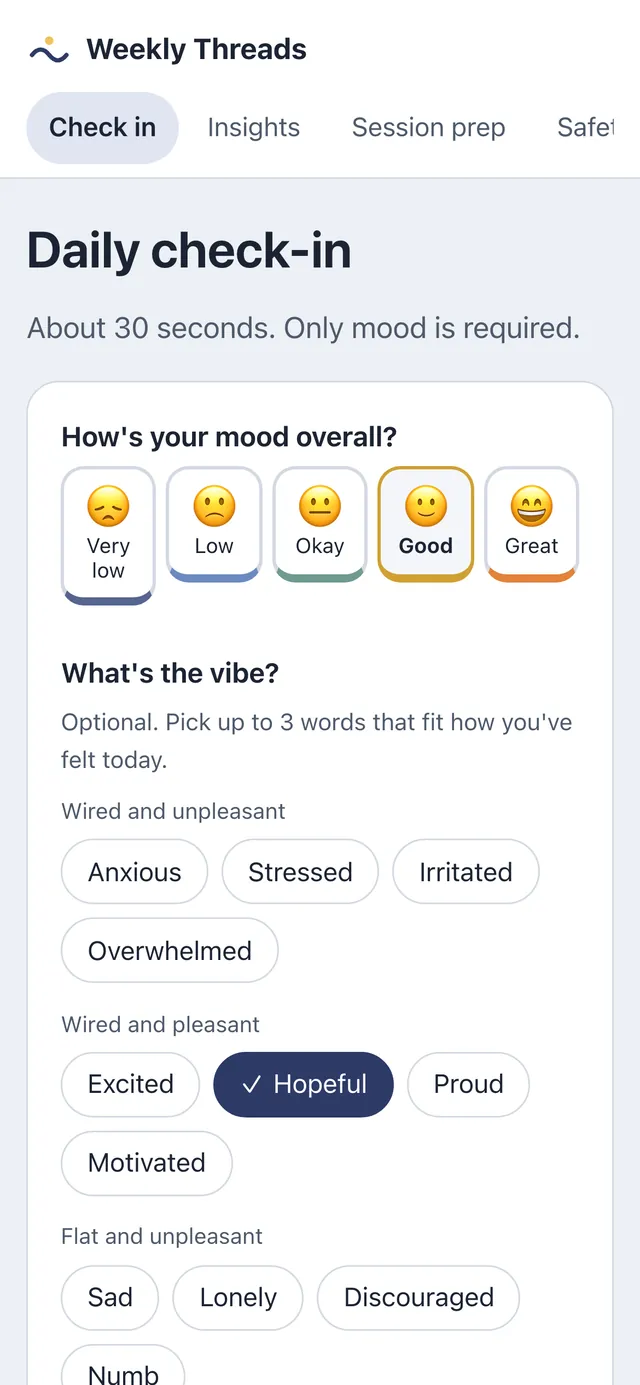
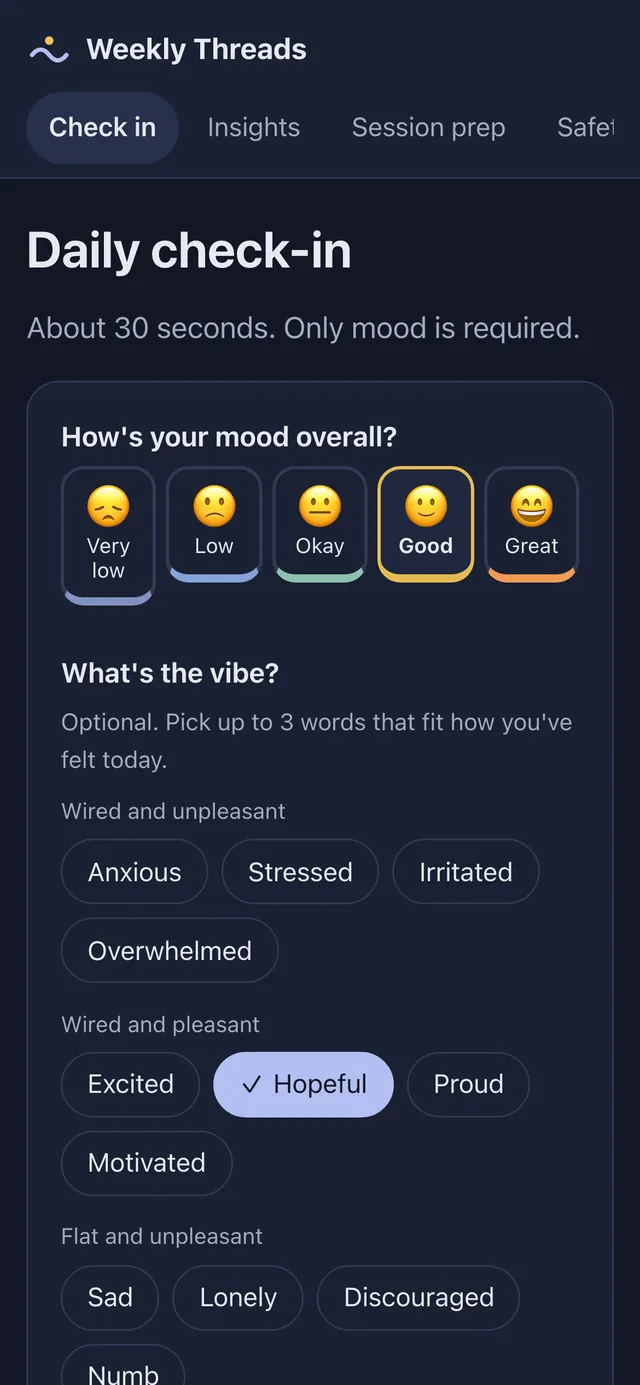
The reflecting happens when you look back
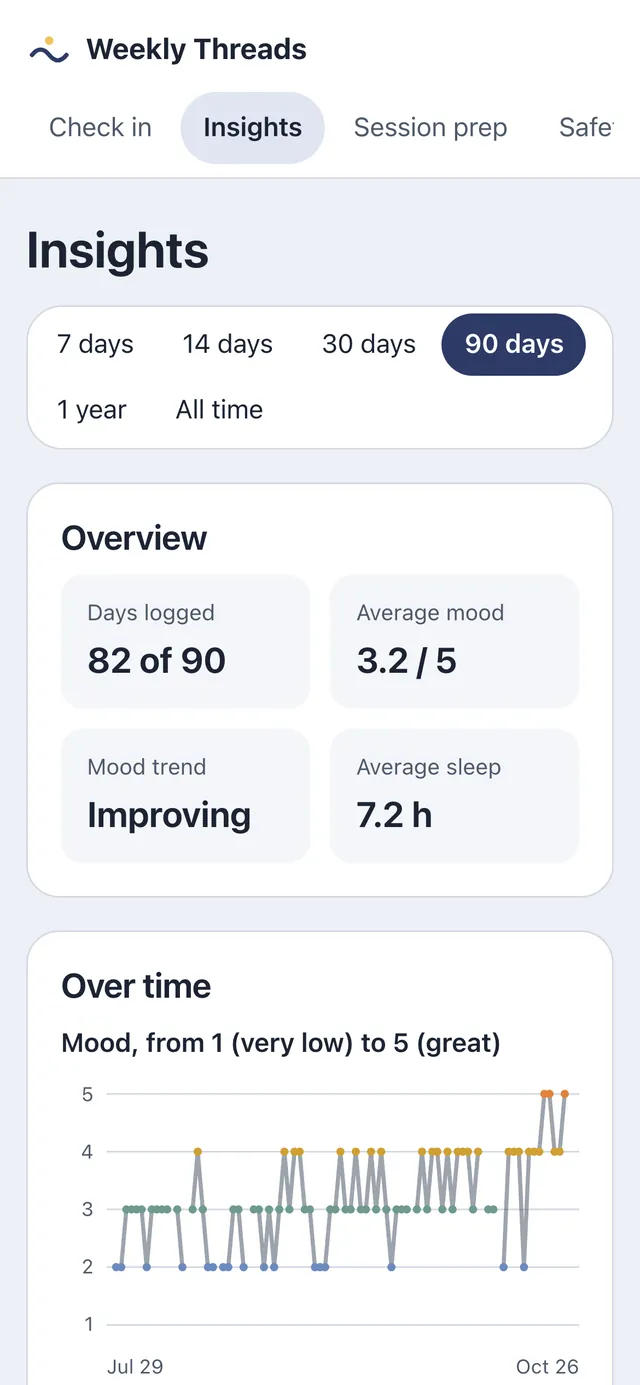
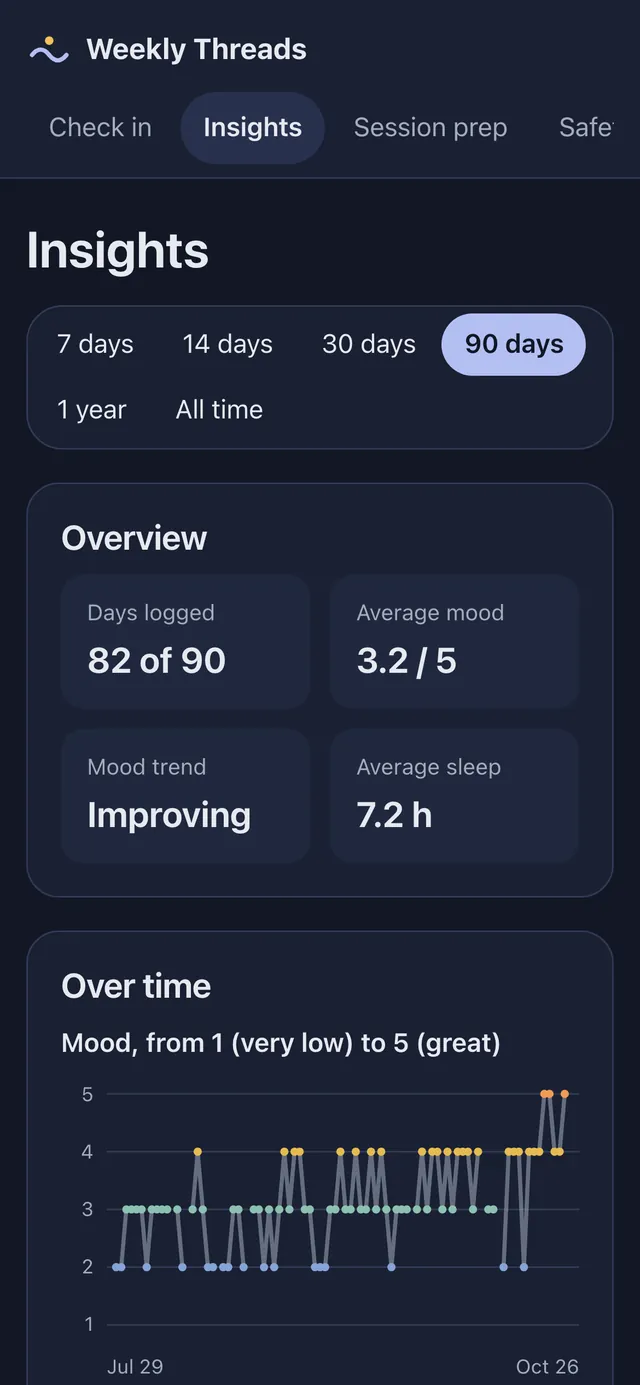
A few weeks of check-ins give you something a journal often doesn't: a picture. Your mood over time, the days that stood out, the tags that keep appearing. Looking at your own chart is a different kind of reflection from rereading what you wrote.
You can add a short note on days you want to remember something. It's optional, and you don't need full sentences.
Ask yourself one question a week
Once a week, look at your Insights and ask one thing. For example: what did my best days have in common? What was different about the hard ones? You don't need to answer it perfectly. Noticing is enough.
These are patterns in your own data, not causes, but they make good things to think about or bring to a therapist.