How to name your feelings when "fine" isn't enough
"How are you feeling?" "Fine." "Bad." "I don't know." Plenty of people run out of words quickly. That isn't a flaw. Feeling words are a skill that gets easier with a few handholds, and a simple grid can help you find one.
Why specific words help
"Bad" covers a lot of ground. "Overwhelmed" and "numb" are both bad, but they point to different days and different conversations. Specific words give your therapist, and you, more to work with than a number out of five.
Many people also find that putting a feeling into words takes a little of the edge off it.
Two questions: how wired, and how pleasant
When you can't find a word, ask two quick questions. First: is my body wound up or flat? Second: does this feel pleasant or unpleasant? Together they sort most feelings into four groups. This is a simple, common way to lay out feeling words, not a clinical model.
The four groups
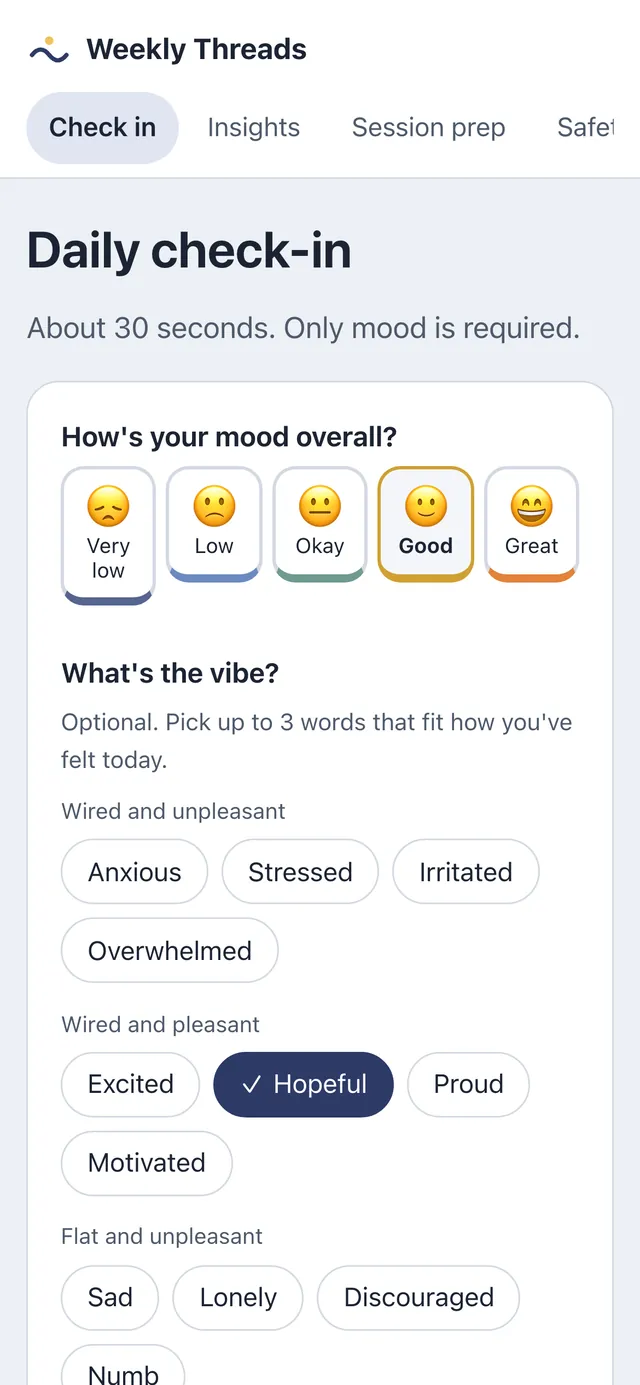
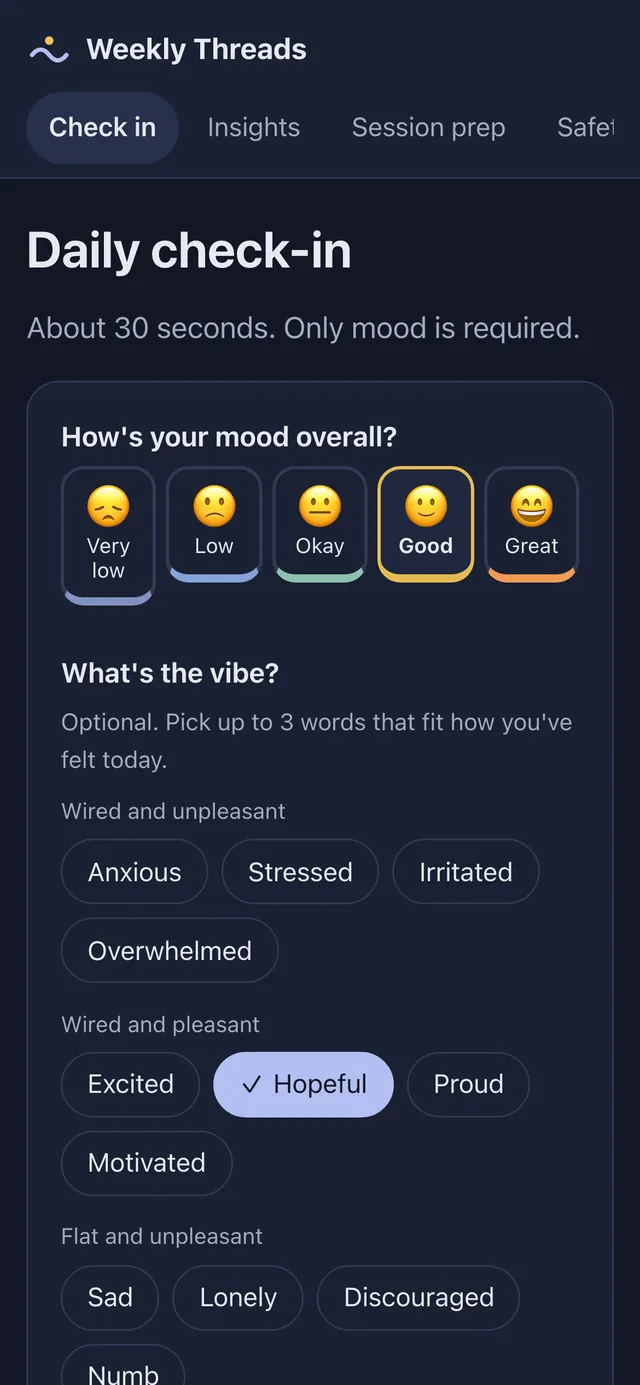
Here's the grid used in the Weekly Threads check-in, with a few words for each:
- Wired and unpleasant: anxious, stressed, irritated, overwhelmed.
- Wired and pleasant: excited, hopeful, proud, motivated.
- Flat and unpleasant: sad, lonely, discouraged, numb.
- Flat and pleasant: calm, content, relieved, grateful.
How to use it in a check-in
After you've said how your day is going overall, pick up to three words. It's fine if they pull in different directions. "Hopeful" and "overwhelmed" can both be true on the same day.
If none of the words fit, choose the group that's closest and move on. The point is a quick, honest label, not the perfect word.
Look at the pattern over time
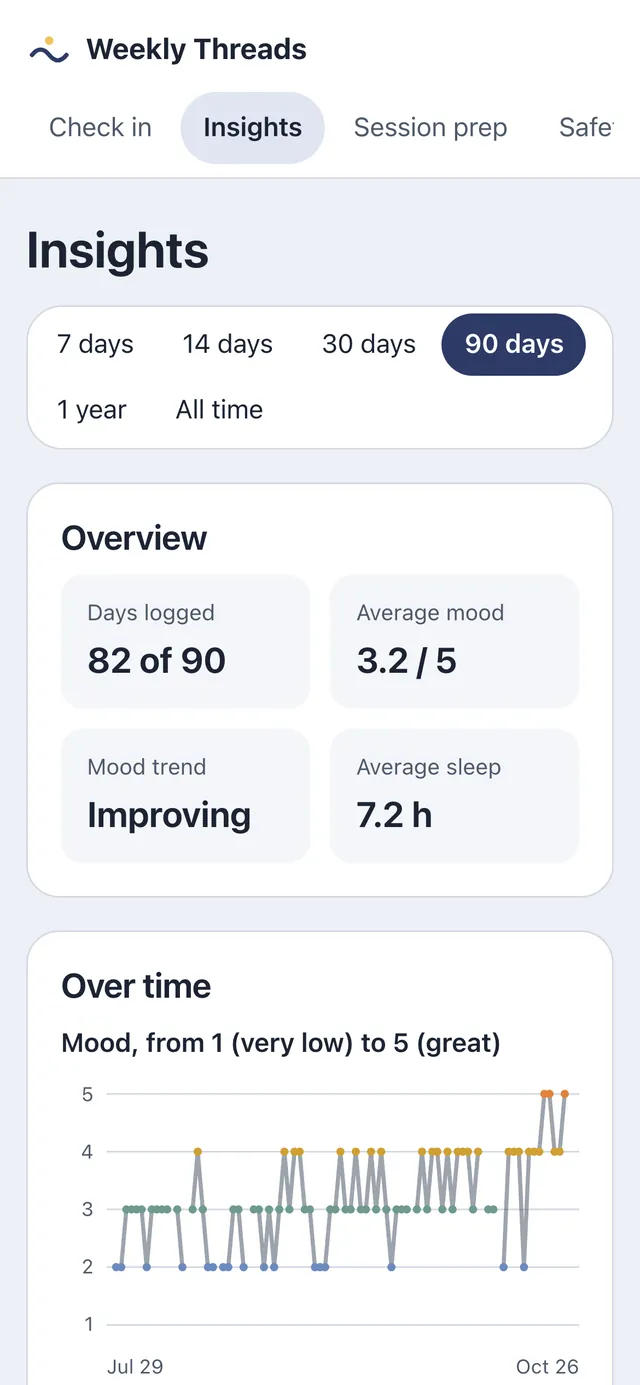
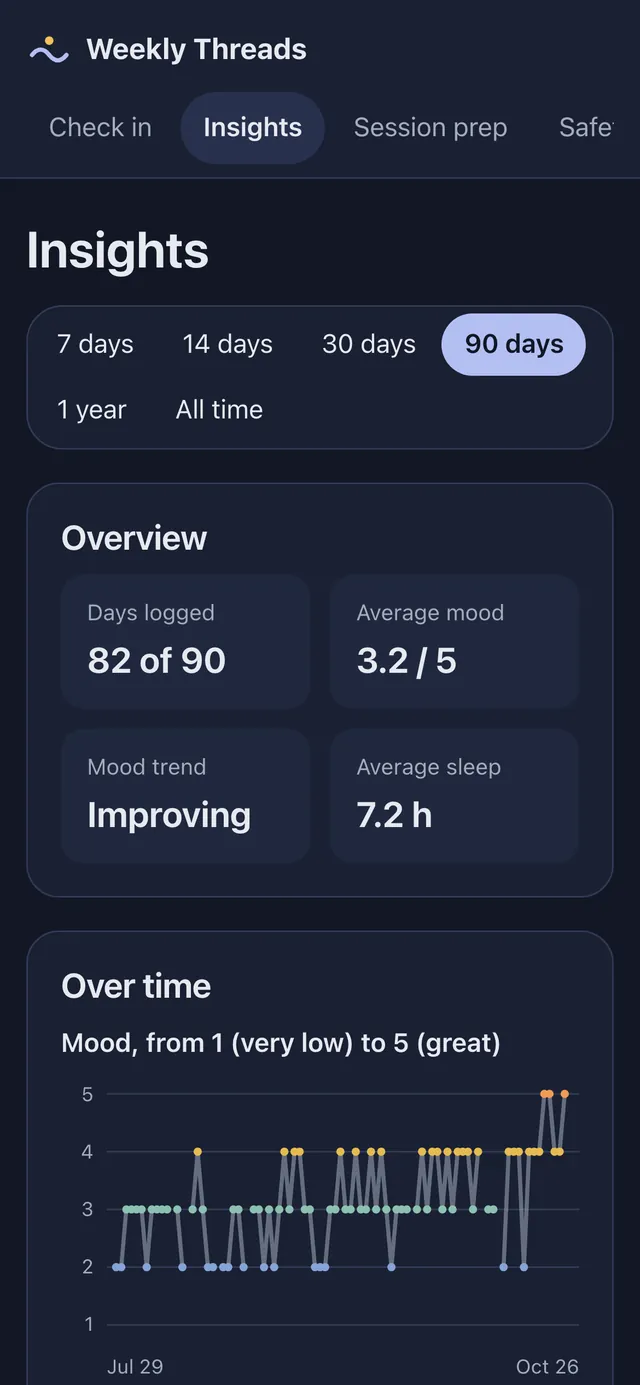
Once you've named a few weeks of feelings, you can see which words keep returning. A stretch of "flat and unpleasant" days reads very differently from a run of "wired and unpleasant" ones, and that gives you something specific to bring to a session.
In Personal Plus ($4 per month), the patterns view shows which feelings you name most. These are correlations in your own data, not causes.
If you still can't find a word
That's okay. You can say, "I don't have a word for this, but it feels like…" and describe it in your body or in a picture. A therapist can help you build the vocabulary over time, and "I don't know" is a fine thing to say in a session.
Try it
The check-in in Weekly Threads asks for up to three feeling words after your mood, grouped by energy and pleasantness. It's free and takes under a minute.
General tips, not medical advice. Weekly Threads isn't a crisis service. In the US, call or text 988 any time.