What is a thought record? A plain-language guide with an example
A thought record is a simple writing exercise: you describe what happened, the thought that showed up, and what else might be true. It's common in CBT-style therapy. This guide explains it in plain language. It isn't a substitute for working with a therapist, and it's worth asking yours whether it would suit you.
What a thought record is
When something upsets you, your mind often jumps to a quick conclusion: "They're annoyed with me," "I'm going to mess this up." A thought record slows that moment down by putting it on paper. You separate what happened from what you told yourself about it.
It doesn't ask you to think positively. It asks whether the first thought is the whole picture.
The steps
Versions differ, but most follow the same shape:
- What happened? Where were you, who was there, what was going on?
- What went through your mind? The thought, in your own words.
- How strongly did you feel it? Name the feeling and rate it from 0 to 10.
- What supports the thought? Facts, not feelings.
- What doesn't fit with it? What would you say to a friend who thought this?
- What's a more balanced way to see it? Something true that takes all of it into account.
- How do you feel now? Rate the feeling again.
A short worked example
A friend hasn't replied to a message for two days.
Situation: I sent my friend a message on Monday and she hasn't answered.
Thought: She's annoyed with me.
Feeling: Lonely, 6 out of 10.
Evidence for: I haven't heard back, and I was short with her last week.
Evidence against: She's usually slow to reply when work is busy. She sent a warm message on Friday.
Balanced thought: She might be busy. I can't know, and I could send a quick, friendly follow-up.
Feeling afterward: Lonely, 2 out of 10.
How people use it between sessions
Many people write a record when a moment is still fresh, even if it's rough, and bring it to the next session. Your therapist can see how you were thinking at the time, and you can talk it through together.
You don't have to do one every day. A few records over a couple of weeks may be enough to notice which kinds of thoughts keep showing up.
Share only the ones you choose
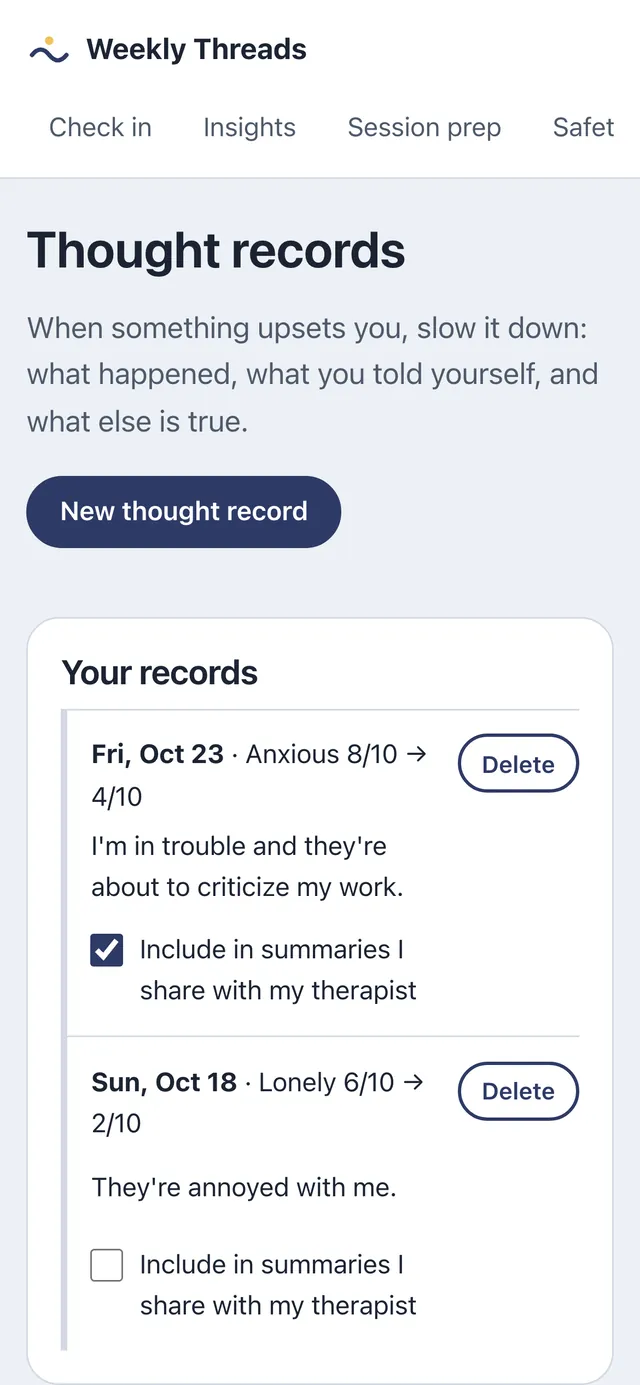
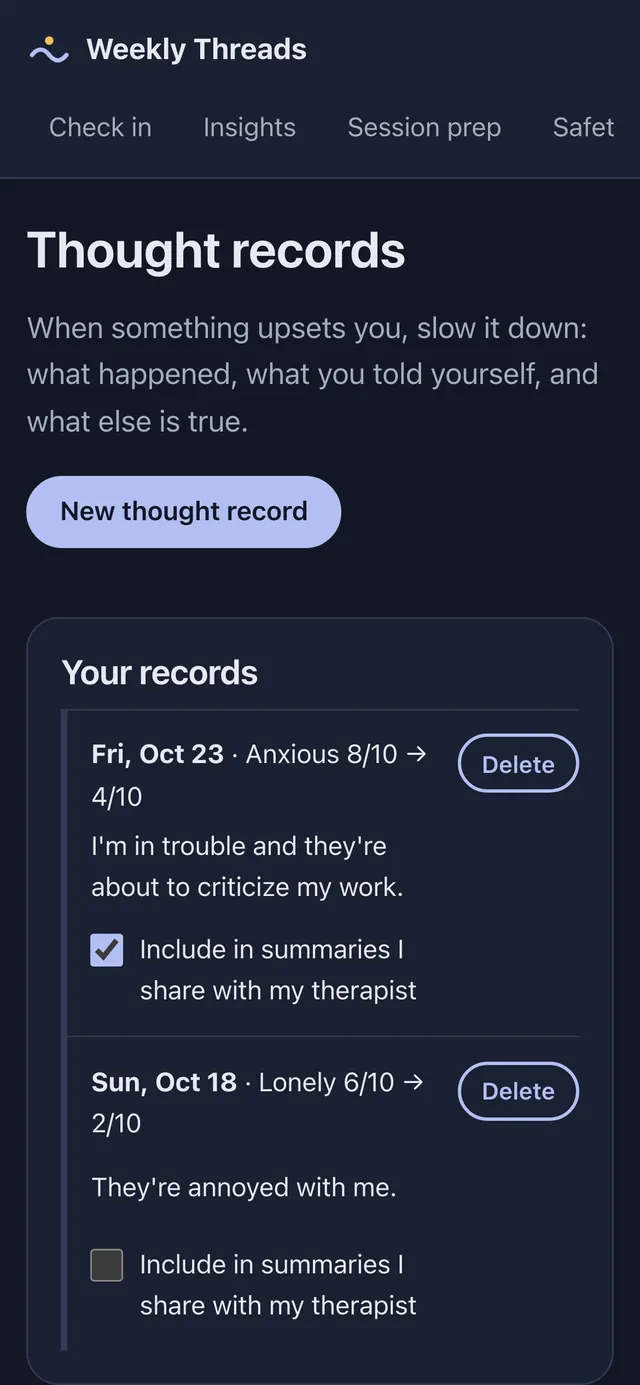
Thought records can be personal. In Weekly Threads, each record has its own checkbox for including it in a summary for your therapist, and nothing is shared unless you tick it.
Thought records are part of Personal Plus, which is $4 per month. The free plan covers check-ins, insights, session prep, the safety plan and summary links.
When it isn't the right tool
If a moment feels overwhelming, writing a record may not be what you need first. Do what helps you feel steadier: slow breathing, a person you trust, a walk. If you're in danger or thinking about harming yourself, contact your local emergency number. In the US, you can call or text 988 at any time.
Try it
Thought records in Weekly Threads are part of Personal Plus, at $4 per month. Each one has its own checkbox for sharing.
General tips, not medical advice. Weekly Threads isn't a crisis service. In the US, call or text 988 any time.