Why days blur together
If you find it hard to remember how last Tuesday felt, you're not alone. Memory tends to flatten a week into one overall impression, usually shaped by whatever happened most recently. A quick note taken on the day keeps the details that memory loses.
This guide is general tips from a mood-tracking app, not medical advice. If you're working with a doctor or therapist, they're the best people to ask about what to track.
Keep it to 30 seconds
The biggest reason trackers get dropped is that they ask for too much. Start with the smallest version: how was your mood, and anything you want to remember. You can add sleep, energy and feelings later, or never.
The Weekly Threads check-in is built for this. You tap a mood, optionally rate anxiety and energy, and you're done.
Tie it to something you already do
A reminder to "track your mood" competes with everything else in your head. A habit you already have is a stronger cue. Pick one that happens every day without effort:
- After you brush your teeth at night.
- When you plug in your phone to charge.
- While the coffee brews or the kettle boils.
- When you sit down for your first meal.
Make a missed day not matter
Skip the streak. A log with gaps still shows you patterns. Weekly Threads counts "days logged out of days in the range" without scolding you, and a missed day is just a blank on the chart.
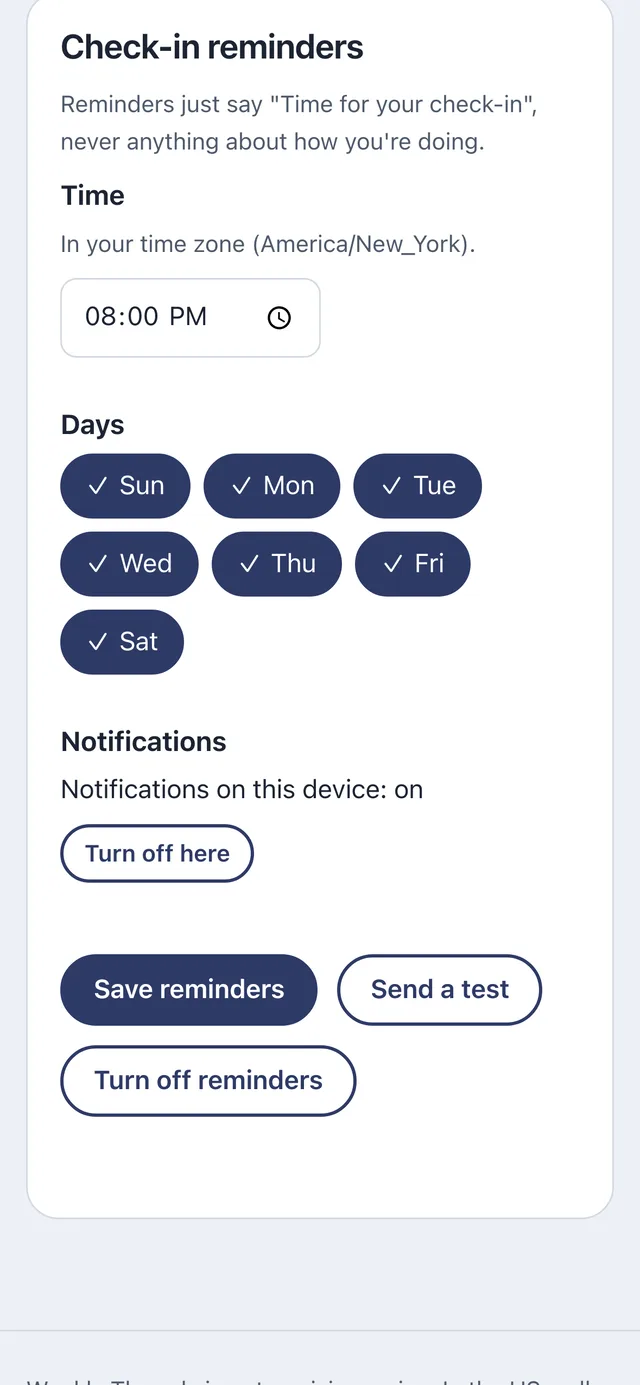
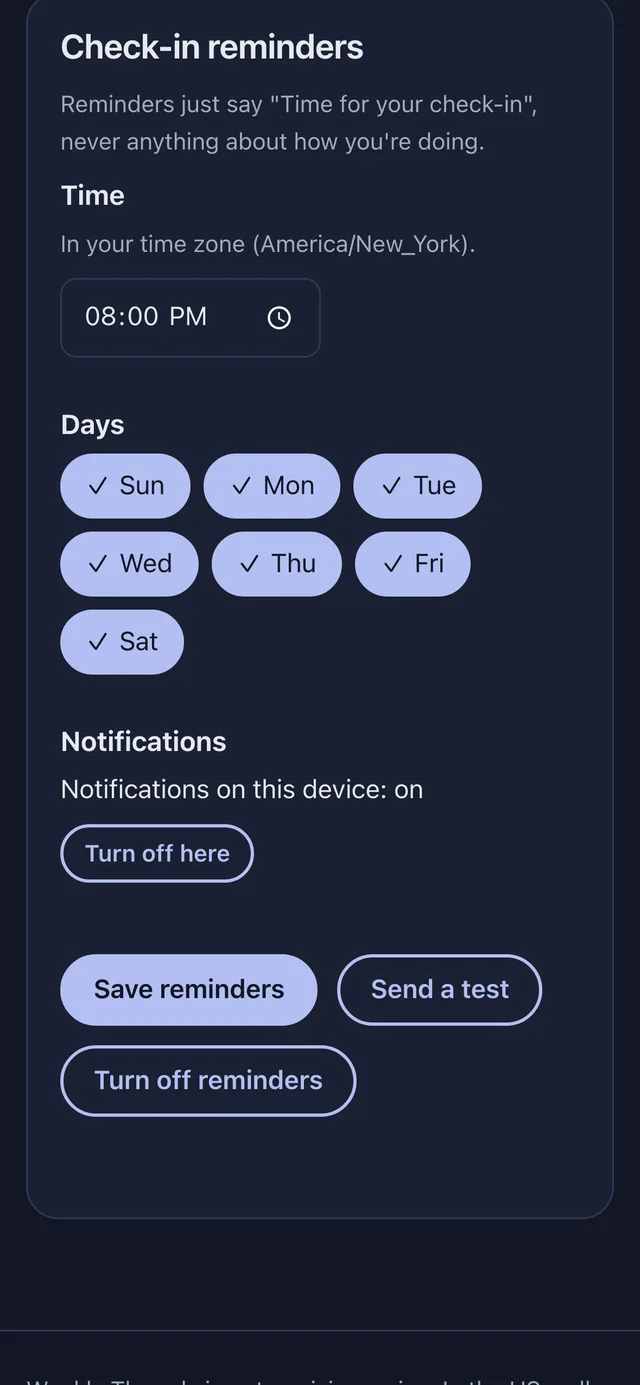
If you do want a nudge, you can add a free reminder to your calendar right after a check-in: a repeating event at the time and on the days you choose. Personal Plus can send it as a notification on your phone or computer instead. Either way it only says "Time for your check-in", so nothing private shows on a lock screen.
Use tags instead of long notes
Writing a paragraph is a lot when your attention is thin. A tag like "meds", "poor sleep" or "deadline" takes a second and still lets you see patterns later. Add a note only on the days when you have something to say.
Look back once a week
The payoff isn't the daily entry, it's the glance back. Once a week, open Insights and look at the shape of your days: when your mood dipped, how you slept, which tags kept showing up. These are your own numbers, not a diagnosis.
If you see a therapist or prescriber, a one-page summary can save you from trying to remember the whole month in the room.