How to remember and keep track of your therapy homework
Your therapist suggests something to try this week, such as a short walk, a breathing exercise, or writing down a thought. It sounds easy in the room. By Wednesday you can't remember exactly what it was. This is common, and a little structure helps.
Write it down before you leave the room
The best time to capture homework is the moment it's given. Before the session ends, say it back: "So you'd like me to try X, a few times this week?" Then write it in your own words.
If you wait until the drive home, you'll lose the details that made it make sense.
Make each task small and specific
"Be kinder to myself" is hard to check off. "Ten minutes outside, alone" is something you can tell was done or not. If your therapist's suggestion is broad, ask what it would look like on a normal Tuesday.
- How many times this week?
- What counts as having done it?
- What should I pay attention to while I do it?
Keep it where you'll see it
A note buried in a notes app tends to stay buried. Put the list somewhere you already look each day: next to your daily check-in, on your phone's home screen, or on the fridge.
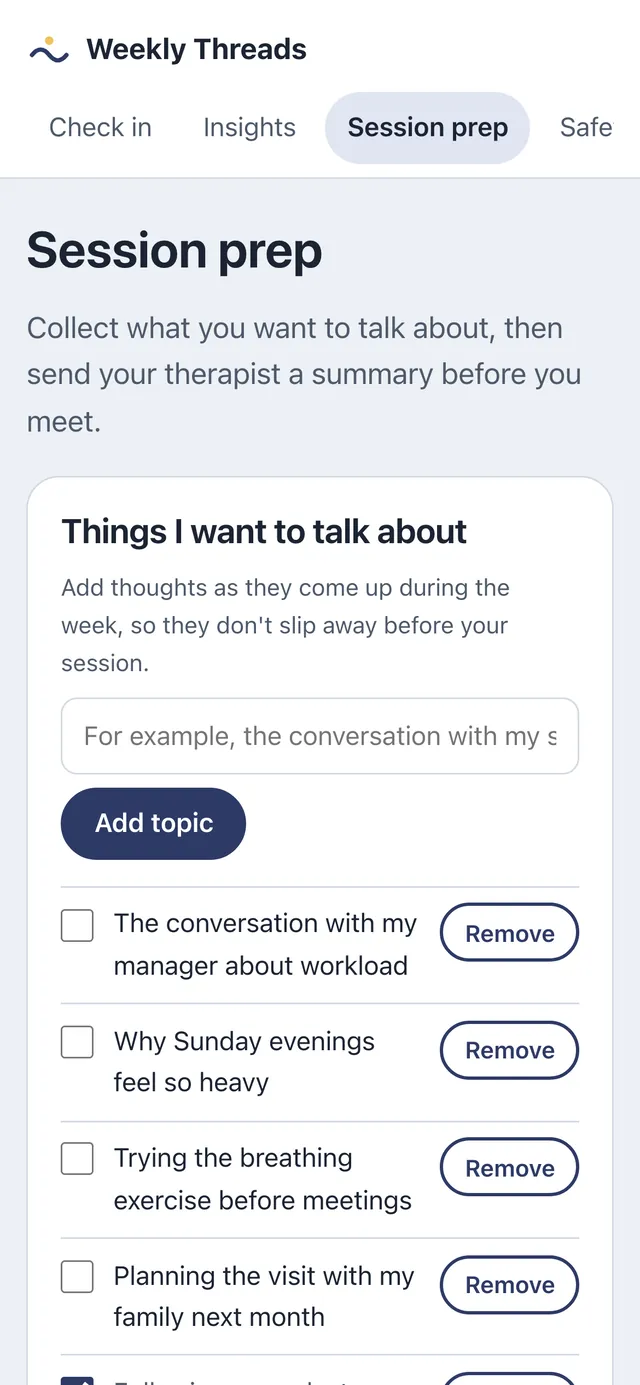
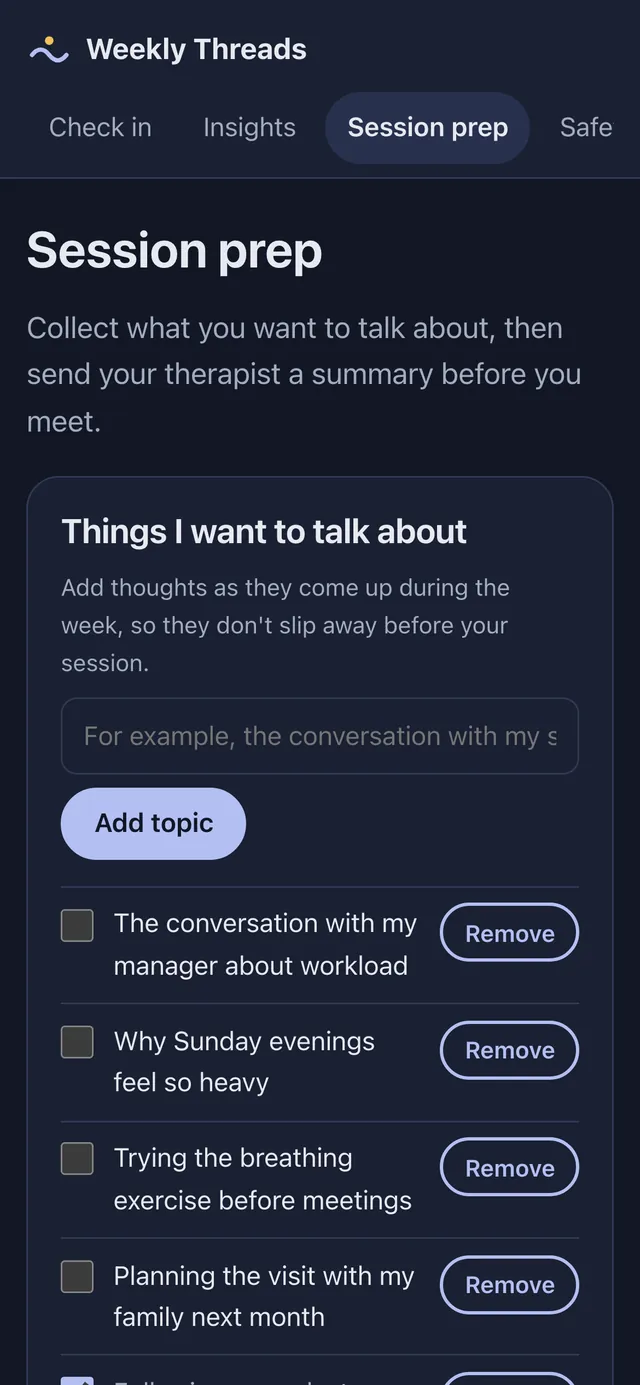
In Weekly Threads, the Session prep page has a Practice between sessions list where you can add up to eight items and tick off the days you did them. You see the list alongside your check-ins.
Count "I didn't do it" as information
If you didn't get to it, that isn't a failure to confess. It's something to tell your therapist, because the reason is often useful: it was too big, you forgot, it felt silly, or the week was too hard.
A short note like "Didn't do it. Wednesday was awful" is worth more than a polished report.
Report back in a sentence or two
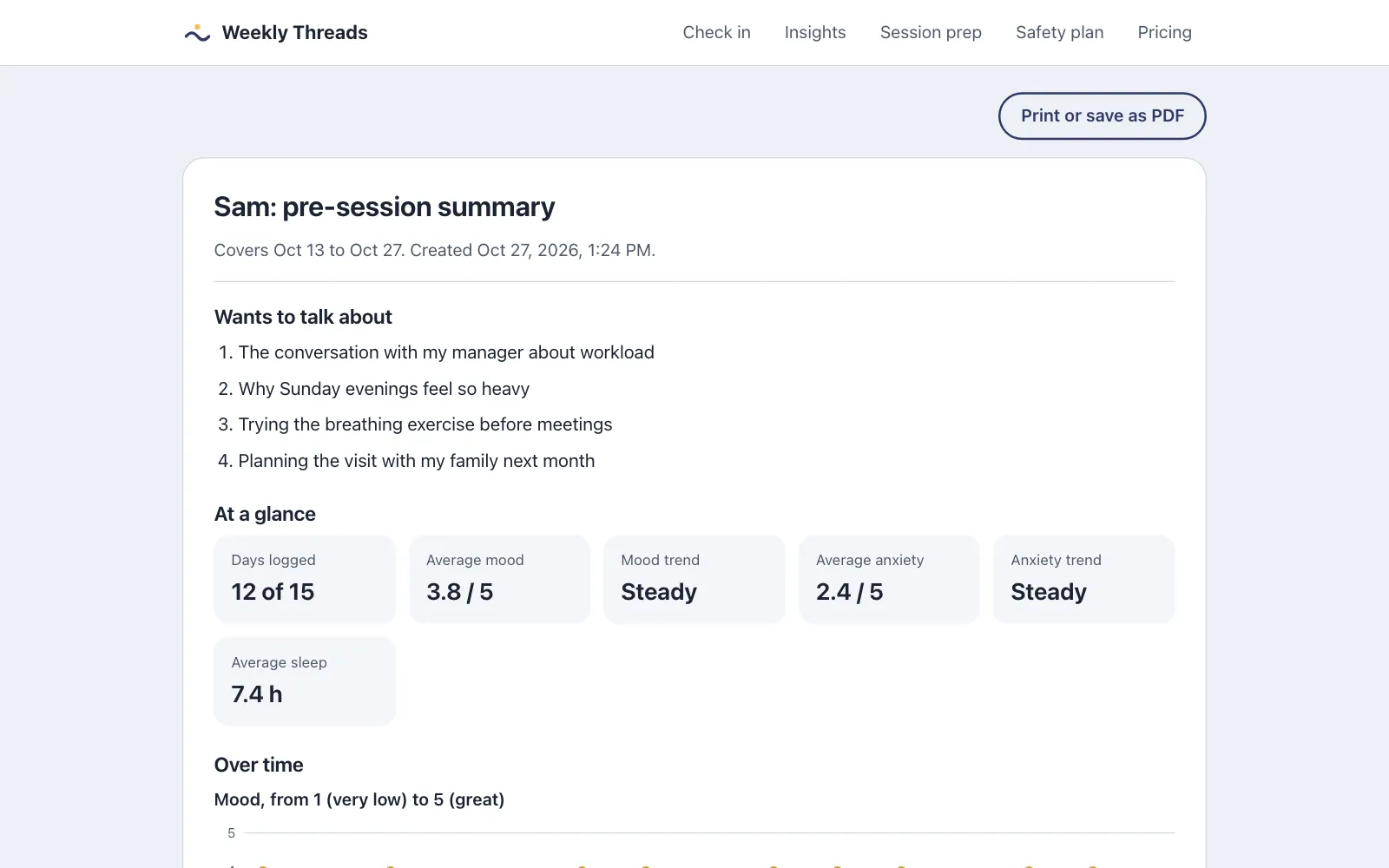
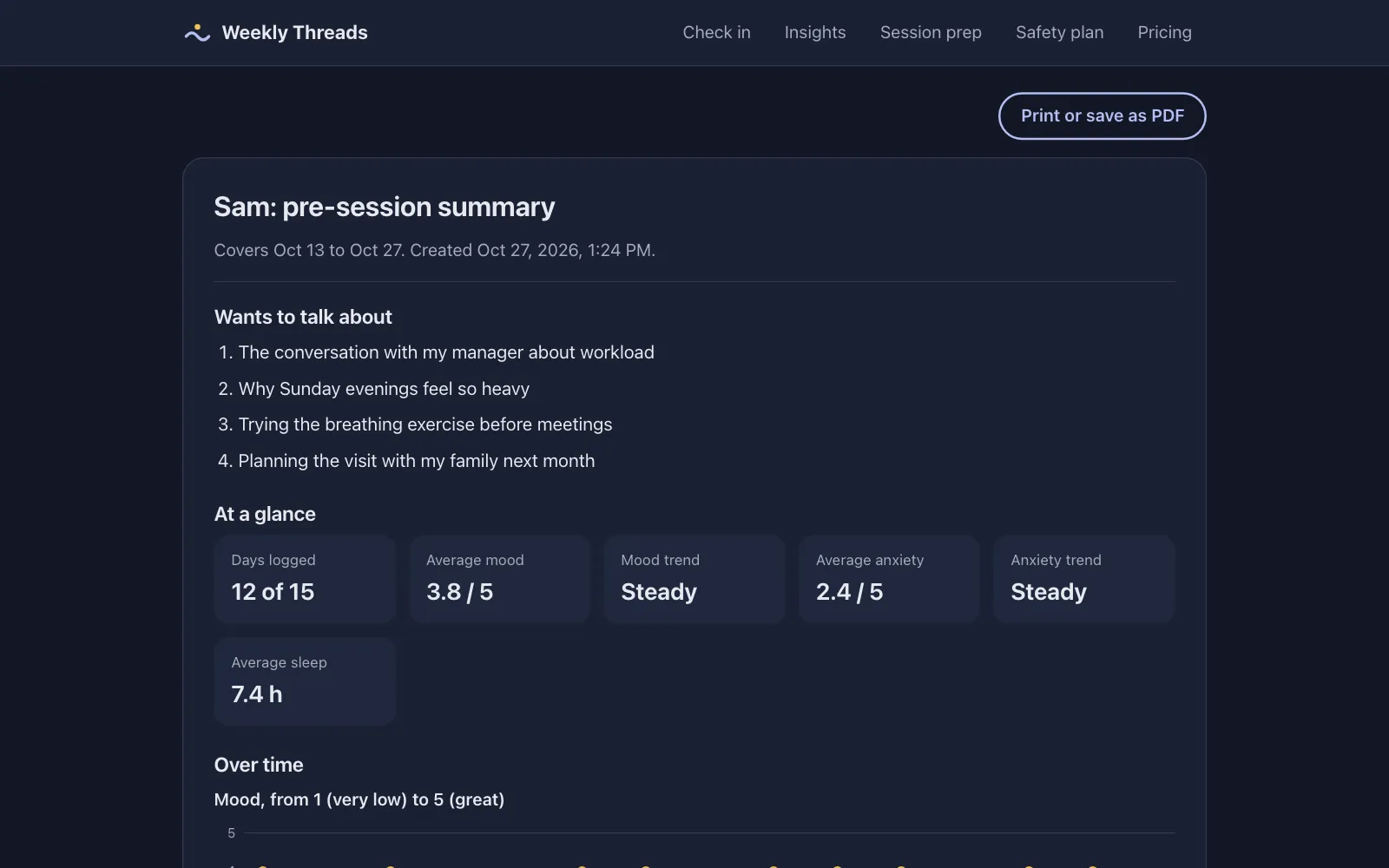
You don't have to remember every detail. Before the next session, write a line for each task: did you do it, and what did you notice? Add it to your list of things to talk about.
Ask for a different task if this one doesn't fit
Homework is meant to be useful to you. If a task keeps not working, tell your therapist. Adjusting it, making it smaller, or trying something else is a normal part of the process.
Try it
Weekly Threads keeps a short practice list next to your check-ins and your topics, so there's one place to look before a session.
General tips, not medical advice. Weekly Threads isn't a crisis service. In the US, call or text 988 any time.