Keep the bar low
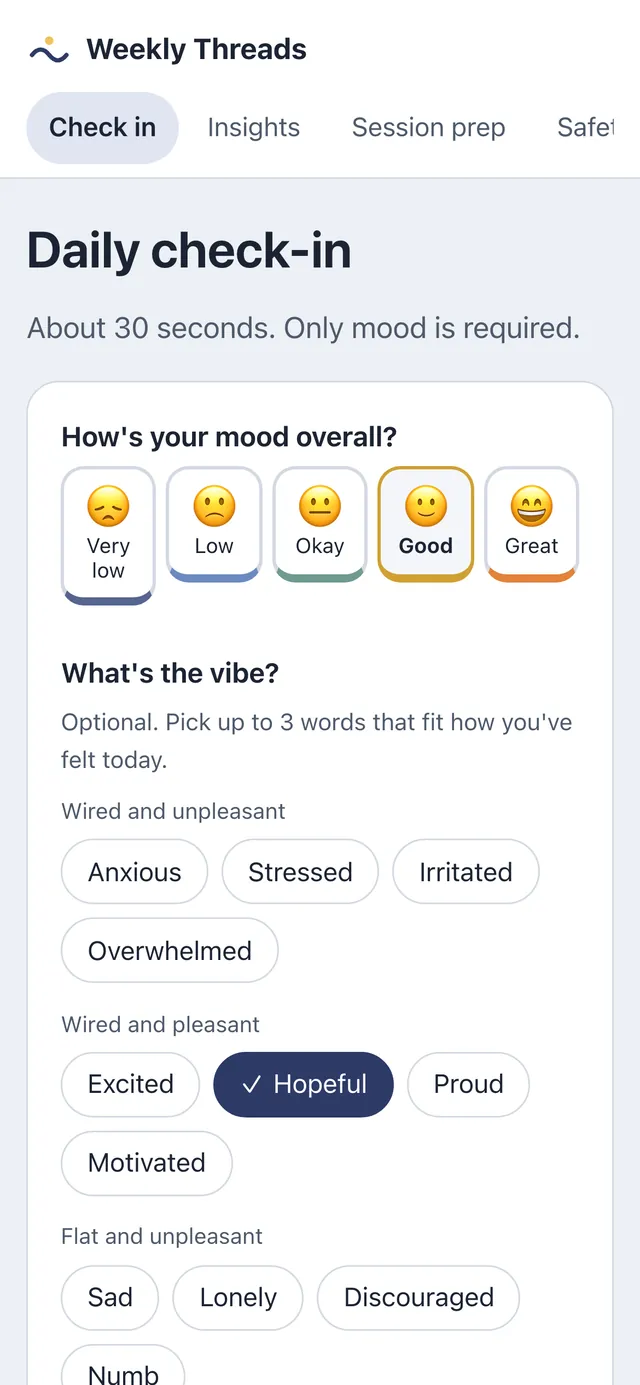
During a hard stretch, aim for the smallest possible habit. One tap for your mood is enough. If you have more in you, add a feeling word or a tag. If you don't, close the app. You haven't failed.
Name what you feel without explaining it
You don't need to write about it or make sense of it. Picking up to three words, such as "overwhelmed", "numb" or "hopeful", can be enough. Feelings can pull in different directions at once, and the check-in lets you say so.
Track the basics: sleep and energy
When life is stressful, sleep and energy are often the first things to slip. Logging them gives you a gentle read on how much you're carrying, and a reason to rest when the numbers drop.
Look back to see you're moving
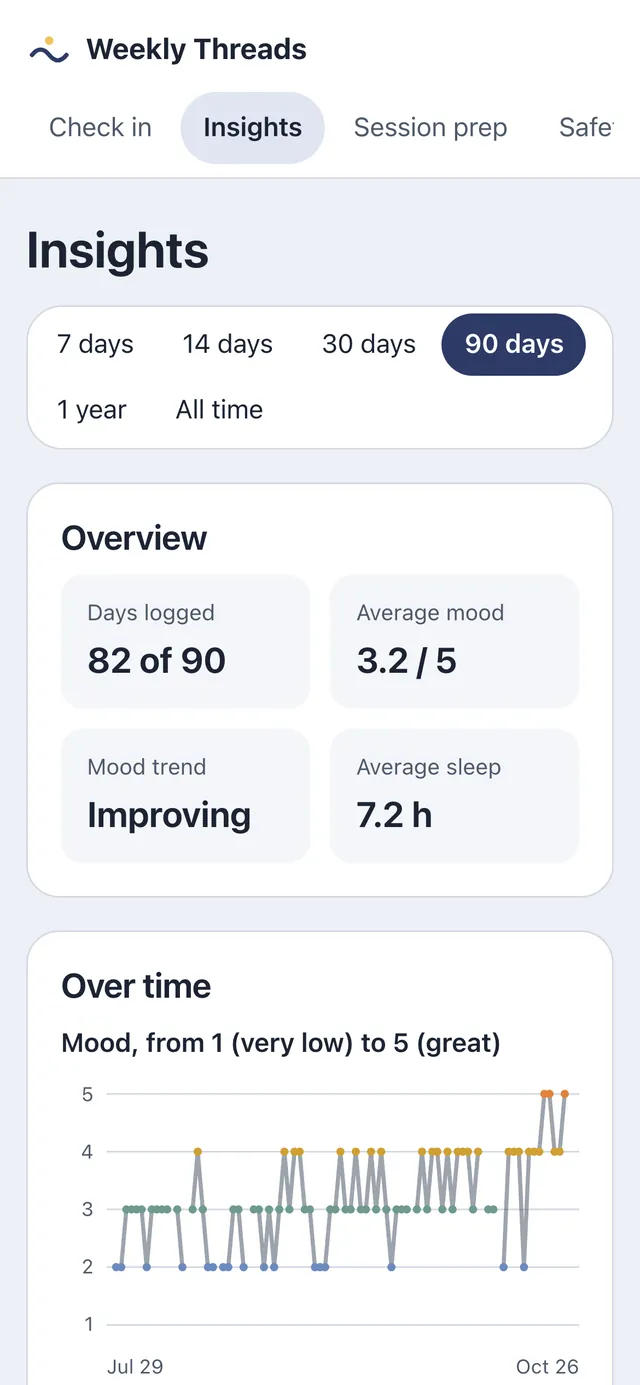
In the middle of a hard period it can feel like nothing is changing. A few weeks of check-ins can show small shifts you'd otherwise miss, such as a slightly better week or a bad day that passed. They can also show a stretch that's getting harder, which is worth noticing too.
Know when to reach out
A mood tracker isn't support, and nobody monitors your check-ins. If things feel like too much, or if your mood stays low for weeks, talk to a friend, your doctor or a therapist. If you're in crisis, call or text 988 in the US, any time.
It's also worth thinking about a safety plan ahead of time. Weekly Threads has a free one you can fill in whenever you're ready.