How to write a personal safety plan before you need it
A personal safety plan is a short written guide you make for yourself while you're okay, so it's there when things get hard. When you're overwhelmed, it's difficult to think clearly or remember what usually helps. A plan does some of that thinking in advance. If you're in danger right now, skip to the last section.
Why write it now
The best time to make a plan is when you're calm enough to think about it. It doesn't mean you expect the worst. It's the same idea as knowing where the exit is.
Many therapists help clients build one, and yours may have a format they prefer. You can also start on your own and bring it to a session.
The parts of a plan
Safety plans are usually built from a few simple sections. You write each in your own words:
- My warning signs: the thoughts, moods or behaviors that tell you things are getting harder.
- Things I can do on my own to feel calmer: a walk, music, a shower, slow breathing.
- People and places that take my mind off things: a friend's place, a café, a park.
- People I can ask for help: names and phone numbers.
- Professionals I can contact: your therapist, doctor, or a crisis line, with numbers.
- Making my surroundings safer: steps that keep your environment safe during a hard time.
- What matters to me and keeps me going: people, pets, plans, values.
Make the steps concrete
"Do something relaxing" is hard to follow at your worst. "Step outside for five minutes and breathe slowly" is easier. Write steps small enough that you could do them with very little energy.
Put real names and phone numbers in. If you'd have to look something up, it's a barrier when you need it least.
Think about your surroundings
The "safer surroundings" part is about making a hard moment less risky. It might mean asking someone to hold onto something, changing your evening routine, or arranging to be around other people. If you're not sure what to put there, this is a good part to work on with a therapist.
Keep it where you can find it
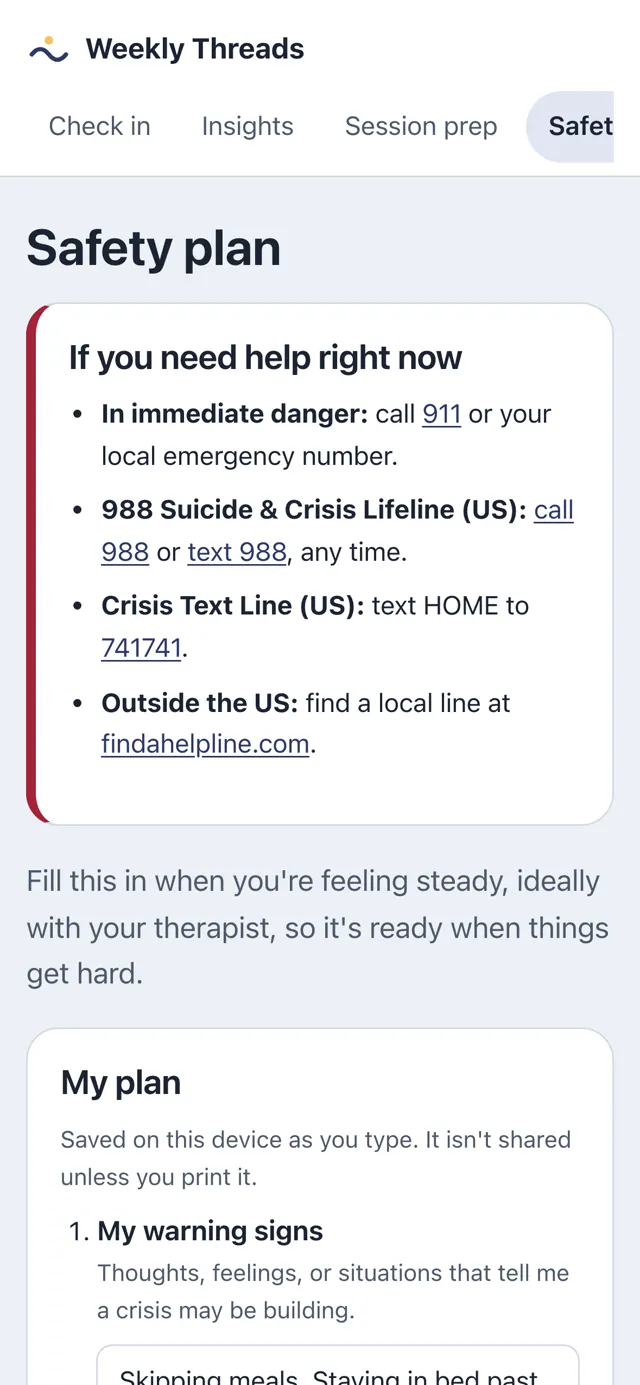
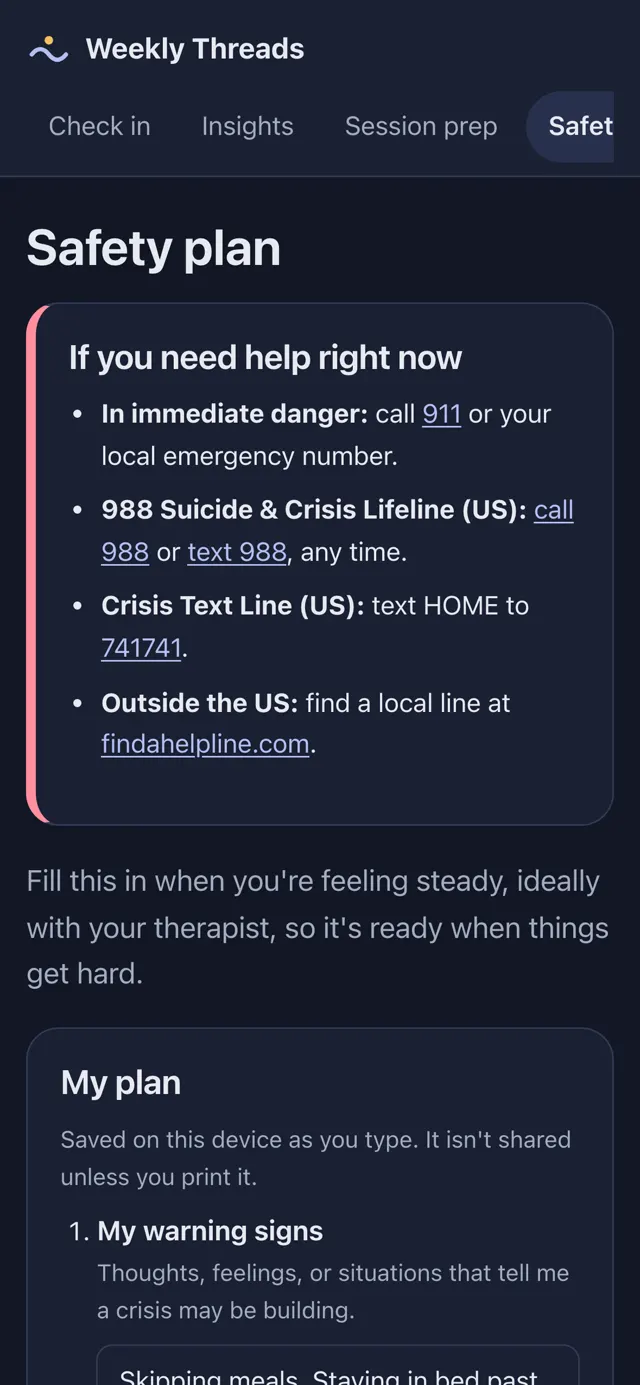
A plan that's hard to find won't help. Keep a copy on your phone and, if you like, on paper. In Weekly Threads, the Safety plan page stores your plan on your device alongside the crisis resources, so it's one tap away.
You can also share it with your therapist and go through it together. Review it every so often. People, numbers and what helps all change.
If you're in danger right now
A written plan isn't a substitute for help. If you're in danger or thinking about harming yourself, contact your local emergency number now. In the US, you can call or text 988 at any time, day or night. If you can, tell someone near you.
Try it
Weekly Threads has a free safety plan page with seven short sections, stored on your device, with crisis resources alongside it. It isn't a crisis service.
General tips, not medical advice. Weekly Threads isn't a crisis service. In the US, call or text 988 any time.