PHQ-9 and GAD-7 explained: what the questions ask and what scores mean
If your therapist or doctor has handed you the PHQ-9 or the GAD-7, you may have wondered what the numbers mean. They are short screening questionnaires, not diagnoses. Here's what they ask, how the totals work, and how to use them as a starting point for a conversation.
What they are
The PHQ-9 is a nine-question form about mood. The GAD-7 is a seven-question form about anxiety. Both are widely used, and both ask about the last two weeks.
They're self-reported. You answer based on how you've felt, and nobody checks your answers against anything else.
What the questions ask
Each question describes a common problem, and you say how often you've been bothered by it over the last two weeks. For example, the PHQ-9 asks about little interest or pleasure in doing things, trouble sleeping, and low energy. The GAD-7 asks about feeling nervous or on edge, not being able to stop worrying, and being easily annoyed.
Each answer is scored from 0 (not at all) to 3 (nearly every day).
How the scores add up
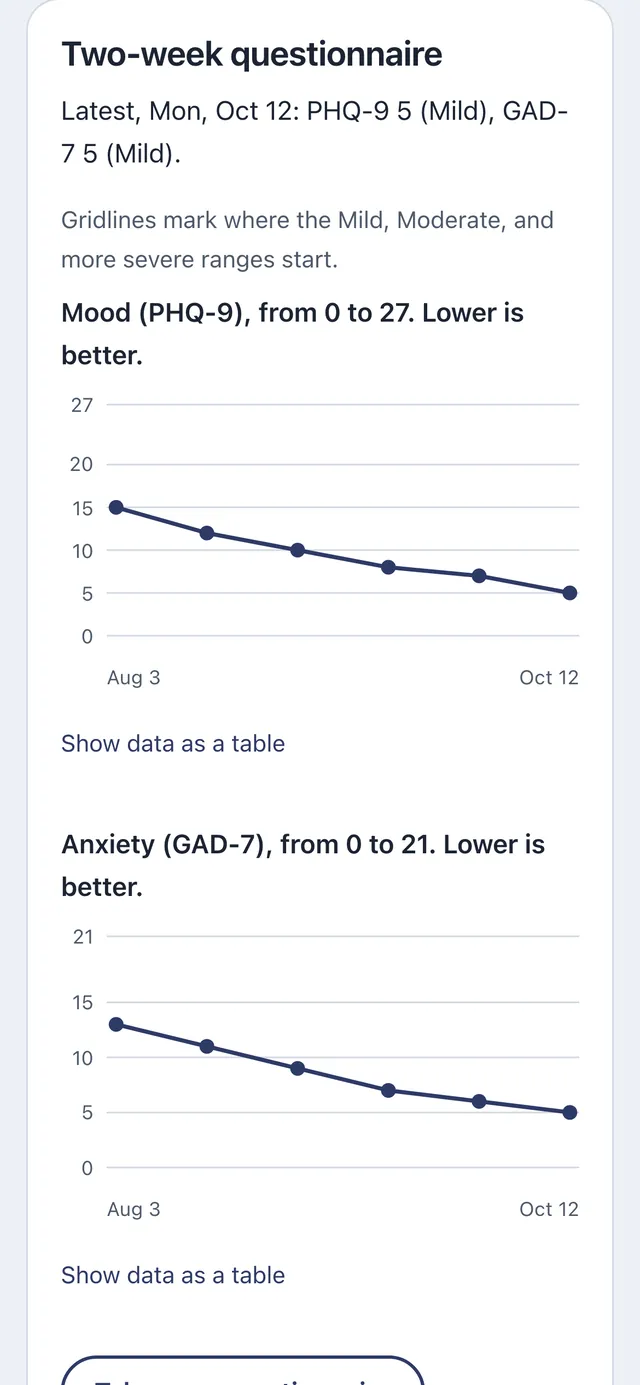
You add up your answers. The PHQ-9 total runs from 0 to 27, and the GAD-7 total runs from 0 to 21. Lower totals mean you were bothered by these problems less often.
Published guides group totals into ranges with labels such as minimal, mild, moderate and severe. These ranges are a rough guide for professionals, and the labels don't capture your situation. Ask your clinician what your own score means for you.
What they can't tell you
A questionnaire can't tell you why you feel the way you do, and it can't diagnose anything. A single score can be affected by a bad week, a poor night's sleep, or how you were feeling that day.
They also can't see everything that matters to you: what's going on in your life, what you're managing well, and what you need.
- They're a snapshot, not a verdict.
- They don't replace a conversation with a clinician.
- A low score doesn't mean you're fine, and a high score doesn't mean something is wrong with you.
Why people repeat them
Taking the same questionnaire every couple of weeks gives you a line instead of a single dot. You can see whether your answers have moved over time and bring that picture to your therapist. The change is often more useful to talk about than any single number.
One question to know about
The last item on the PHQ-9 asks about thoughts of being better off dead or of hurting yourself. If you've had those thoughts, please tell someone. In the US, you can call or text 988 at any time. Outside the US, contact your local emergency number or crisis line.
Try it
In Weekly Threads, the two-week questionnaire is part of Personal Plus ($4 per month). The results show on a chart you can share with your therapist if you choose.
General tips, not medical advice. Weekly Threads isn't a crisis service. In the US, call or text 988 any time.